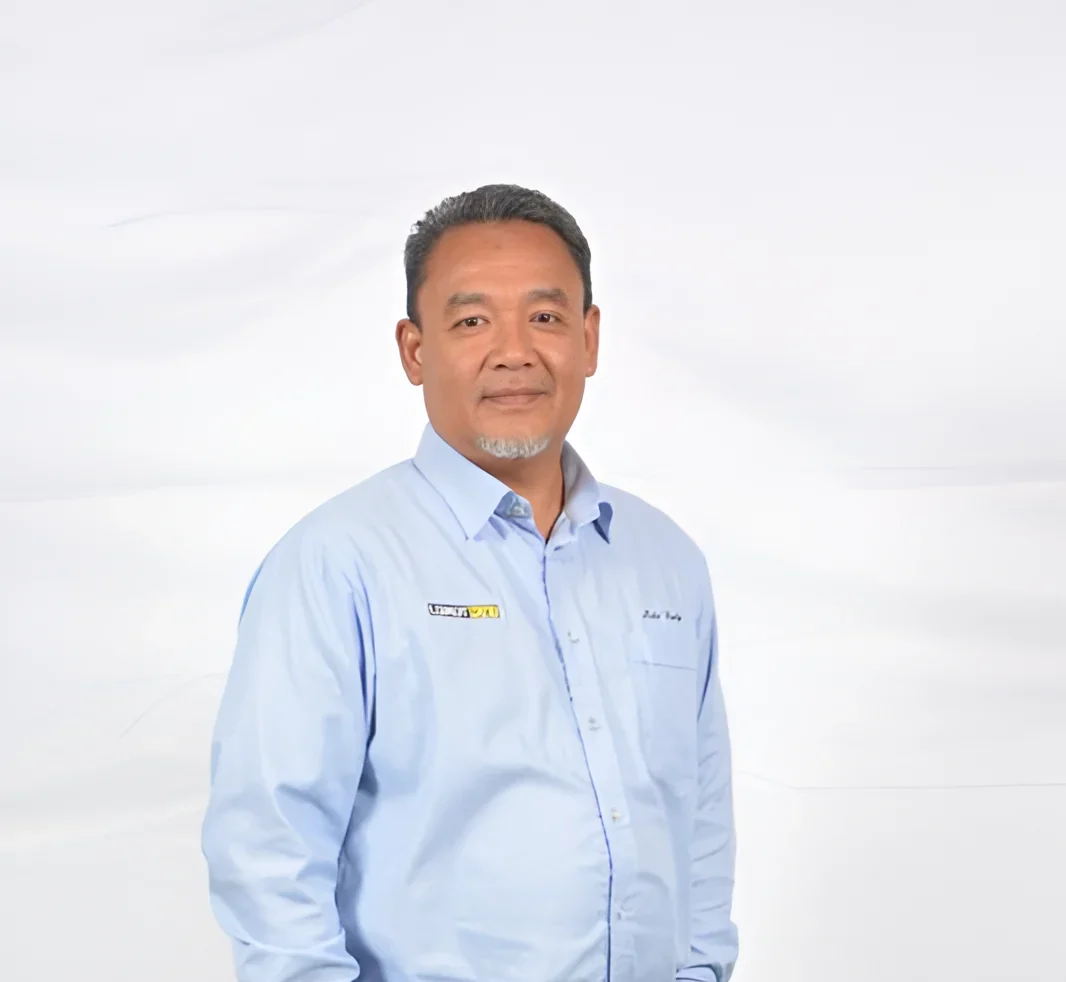


[2025, September 24] When it comes to steering Lumut Port’s daily operations and long-term strategy, Chief Operating Officer Tuan Haji Mohd Rusly Tamsir brings more than three decades of hard-earned experience across maritime, energy and port management. His leadership combines the discipline of a Royal Malaysian Navy officer, the precision of a HSE practitioner and the foresight of a seasoned port strategist.
“Operations are not just about moving cargo. It is about anticipating challenges, building resilience and ensuring that every vessel, every shipment and every stakeholder benefits from a system that is safe, efficient and forward-looking,” says Tuan Hj. Rusly.
Tuan Hj. Rusly’s journey began at the age of 18 when he joined the Royal Malaysian Navy. Nine years of service as a deck officer sharpened his skills in maritime navigation, surveillance and discipline. After leaving the Navy in 2001, he transitioned into civilian life through a major project in Manjung, the construction of the Sultan Azlan Shah Power Plant (Manjung 1, 2 and 3). Then he gained further experience in civil infrastructure, both in local and international projects.
Soon after, he joined Qatar Petroleum, where he spent 11 years contributing to the expansion of the world’s largest LNG facilities. As Project Safety and Loss Prevention Officer, Tuan Hj. Rusly was instrumental in ensuring the safe development of storage, processing and exporting infrastructure.
“Working in Qatar taught me the importance of world-class standards in safety and efficiency. These lessons became the foundation of how I manage operations today at Lumut Port,” he reflects.
Building Lumut Port’s operational edge
Returning to Malaysia in 2015, Tuan Hj. Rusly joined Lumut Port as HSSE Manager. His focus on safety and compliance quickly set him apart and within a decade he rose to become COO. His leadership has been central to advancing the port’s Business Strategy Plans (BSPs), from BSP 1.0 to the current BSP 4.0.
A key milestone is the development of Lumut Maritime Terminal 2 (LMT2), designed to decongest LMT1 and separate cargo types for cleaner, more efficient operations. At LMT1, coal handling, classified as black cargo, creates pollution risks when managed alongside white cargo such as silica, white cement, clinker and limestone. LMT2 addresses this by dedicating its operations to white cargo, ensuring higher quality control and reducing pollution.
Lumut Port’s expansion strategy also includes LMT3, a 30-acre terminal earmarked for specific functions, and LMT4, planned under BSP4.0. Once operational, LMT4 will handle coal exclusively, freeing LMT1 to focus on white cargo. This reallocation allows LMT1’s capacity to grow from 5.5 million metric tons annually to 7 million, while also making room for new business opportunities.
The shift of one million metric tons of coal to LMT4 creates organic growth capacity of an additional 2.5 million metric tons at LMT1. Furthermore, the transition opens the door for LMT1 to be developed into a liquid bulk terminal, offering oil and tank storage facilities—an upgrade that will streamline operations and attract new segments of maritime business.
“We don’t just manage today’s cargo, we plan for tomorrow’s growth. Every expansion we undertake must improve capacity, reduce environmental impact and open new business opportunities,” Tuan Hj. Rusly emphasises.
Competitive advantages that stand out
Lumut Port’s strength lies in its unique business model. Unlike container ports that handle goods for multiple shippers, Lumut Port focuses on bulk cargo, often dedicated to a single owner. This model, combined with its location on the Straits of Malacca and proximity to Perak’s mineral resources, ensures time and cost savings for clients.
From mineral exports to ship transfers and diversified marine services, Lumut Port’s strategy is clear: grow organically, invest in infrastructure and deliver efficiency.
Lumut Port has doubled its workforce from 150 employees in 2015 to 300 today, with 70% hailing from Perak, mostly from Manjung itself. This local focus creates economic stability and reduces urban migration.
The port also generates significant state revenue through mineral exports, supports industries like Petronas Dagangan and provides training opportunities in niche port skills.
“We are committed to developing our people. Ports are not just about ships and cargo—they are about knowledge, skills and the livelihoods of those who keep the wheels turning,” says Tuan Hj. Rusly.
Commitment to ESG and sustainability
Tuan Hj. Rusly’s operational philosophy integrates environmental sustainability and corporate responsibility. Lumut Port has adopted circular economy principles, zero-chemical spill practices and coastal mangrove restoration. Recognition such as the Gold Class MSOSH Safety Awards (2023–2024) and the Company of the Year (Port Operations) Award at the 10th Sustainability & CSR Malaysia Awards highlights the port’s industry leadership.
At the heart of Tuan Hj. Rusly’s leadership is a philosophy of partnership.
“Our message to customers and stakeholders is simple: we grow together. As we expand throughput, tonnage and capabilities, we are committed to improving our deliverables so that clients can advance their businesses alongside ours,” he concludes.
With a vision anchored in safety, sustainability and strategic growth, Tuan Haji Mohd Rusly Tamsir is not only strengthening Lumut Port’s operational edge but also positioning it as a gateway of Perak and a rising maritime hub in Malaysia.
#LumutPort #LMT #MaritimeExcellence #COO #PortExpansion #Sustainability #Perak #Malaysia